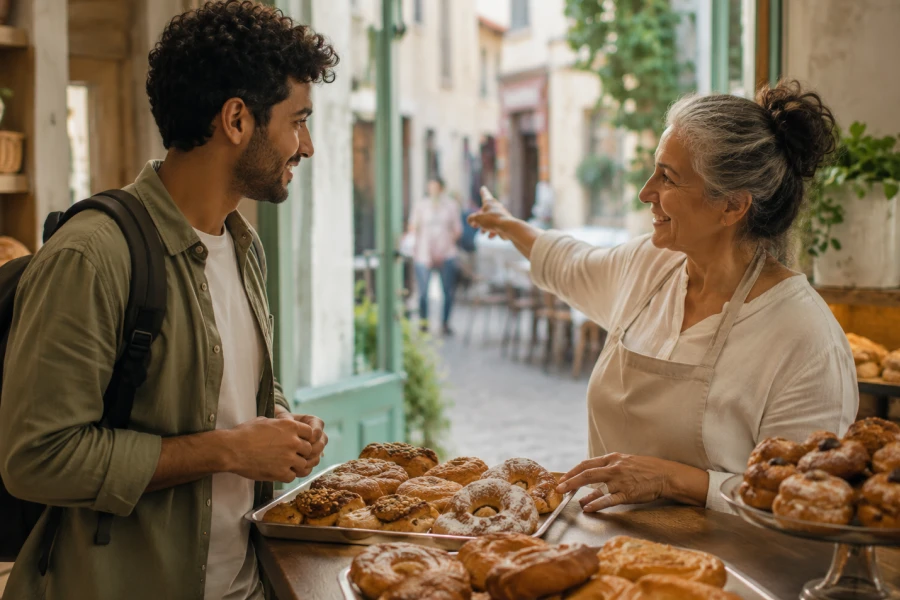
Local food recommendations while traveling can reveal a destination more clearly than any polished dining list. A dish becomes more meaningful when someone explains why people order it. A neighborhood feels different when you arrive through a resident’s suggestion. These small interactions often point beyond tourist-facing restaurants and familiar menus. They can also help you spend your time more intentionally. Good recommendations are not always about finding the most famous meal. Sometimes they lead to the perfect lunch near a museum or train station. Other times they uncover a bakery worth crossing town for. The most useful suggestions match your appetite, timing, and curiosity. That is why real conversations remain one of travel’s best planning tools.
Online ratings can be helpful, but they rarely understand your exact day. A local can tell you where to eat when you have forty minutes. They may know which café works best during a sudden rainstorm. Someone nearby might suggest a quiet dinner after a crowded attraction. Those details save time and make decisions easier. Ask for an option that fits where you already are. Mention your budget or whether you prefer quick service. The more context you offer, the more relevant the answer becomes. A set of cultural dining etiquette and local favorite eateries can help you ask with clarity. You gain a recommendation that works for your real schedule. That matters more than chasing a viral address across town.
Some travelers hesitate because they worry about interrupting strangers. The answer is to choose the setting and timing carefully. Ask when a café is quiet or after a shop employee finishes helping another customer. Keep the request brief, friendly, and easy to decline. People may be more willing to help when they do not feel trapped in a long exchange. Begin with one direct question instead of telling your whole travel story. Then listen carefully to their response. A small conversation can develop naturally when there is mutual interest. You do not need to impress anyone with your food knowledge. You simply need to show openness and appreciation. Those qualities travel well in every destination.
Once you receive a suggestion, make it practical before you head out. Ask whether the place is open that day and how busy it becomes. Find out whether there is one dish worth ordering first. Check how far it is from your next activity. A restaurant can sound wonderful yet be inconvenient for the moment. Planning with that detail in mind avoids unnecessary frustration. Use travel food confidence and conversation starter ideas to keep the exchange natural while gathering useful information. You can also ask whether nearby alternatives offer a similar experience. That backup option gives your day more flexibility. It allows you to follow local advice without losing momentum.
Food becomes more memorable when it connects to the place you are exploring. Try a breakfast that suits the neighborhood’s early rhythm. Choose lunch near a market, waterfront, or park where locals spend time. Let dinner become a reason to explore a different district after sunset. Notice how menus, ingredients, and serving styles change across a city. Those patterns often tell a story about local life. Do not rush through every meal simply to check off famous dishes. Give yourself time to watch, taste, and ask another question. The best recommendation may be something modest but perfectly timed. A simple bowl, sandwich, or pastry can become a defining travel memory. Connection often matters more than spectacle.
A little preparation makes spontaneous food conversations much less intimidating. Learn a few polite phrases before arriving in a new country. Save basic dietary words on your phone for quick reference. Look up regional ingredients so you can recognize them when someone mentions one. Keep a map app ready to pin recommendations immediately. Bring curiosity, but also know what you are comfortable trying. Preparation should make you more flexible, not more controlling. It gives you the confidence to say yes when a great suggestion appears. You can adapt your plans without feeling lost. That readiness turns a chance encounter into an easy next step.
A memorable food experience rarely begins with a reservation confirmation. It begins with noticing the people and places around you. Ask a little more often when someone seems open to talking. Follow your interests instead of limiting yourself to popular lists. Give local suggestions a fair chance when they fit your day. Even a short recommendation can lead to a new part of town. That new corner may lead to a favorite shop, view, or conversation. Food becomes a way of moving through a destination with attention. The destination then feels less like a backdrop and more like a lived place. That is the value of asking before you decide where to eat.



Leave a comment